Loose Skin After Weight Loss: Can You Tighten It Without Surgery?
Mild to moderate laxity responds to non-surgical skin tightening, collagen support and resistance training. Significant surplus skin does not. Here is how to tell which you have before you spend anything.
Loose skin after weight loss can be improved without surgery when the laxity is mild to moderate, using light or energy-based skin tightening to stimulate new collagen, alongside collagen support, adequate protein and resistance training. What non-surgical treatment cannot do is remove a substantial fold of excess skin, and no cream, wrap or supplement will either. The honest dividing line is how much surplus tissue there is: if you can gather a large handful, surgery is the realistic answer, and any clinic implying otherwise is overselling.
Why Weight Loss Can Leave Loose Skin
You did the hard part. The weight is gone, the scan looks like someone else, and then you sit down and your abdomen folds. Nobody warned you, and the advice available online ranges from useless creams to major surgery with very little in between. It is worth saying plainly that this is not vanity or ingratitude. It is an anatomical consequence of volume leaving faster than skin could adapt, and it deserves a straight answer.
Skin accommodates change by remodeling its collagen and elastin network. That capacity is real but finite, and it declines with age. When fat volume falls quickly, the skin that was stretched over it has to reorganize, and how much of that reorganization succeeds depends on factors mostly outside your control.
Amount and Speed of Weight Loss, Age and Collagen
Four factors decide the outcome. The amount lost matters most: skin stretched over a hundred extra pounds for a decade has structural change that will not fully reverse. Speed matters, and rapid loss during a medically supervised weight-loss program gives tissue less time to adapt than a gradual loss across two years. Age matters, because collagen production falls roughly one percent a year from the mid twenties onward. And baseline collagen quality, largely genetic, sets where you start.
Two further contributors get overlooked. How long you carried the weight determines whether elastin fibers were merely stretched or genuinely damaged, and damaged elastin does not recover. Decades of sun exposure degrade dermal collagen independently of weight, which is why the neck and chest often look worse than the abdomen. In women, declining estradiol through the menopause transition accelerates dermal thinning considerably, which is why this frequently becomes noticeable in the fifties.
Can Loose Skin Tighten on Its Own?
Some of it, and the variation between people is wide. Younger clients who lost a moderate amount gradually often see meaningful natural retraction across six to twelve months, and it is genuinely worth waiting that long before spending money. Older clients after a very large or very rapid loss usually see less, and what remains at twelve months is broadly what will remain.
Two things you can do while waiting actually matter. First, protect lean mass, because muscle provides the volume that skin drapes over and losing it makes laxity worse. Second, use sun protection, because ongoing ultraviolet exposure degrades exactly the collagen you need. Neither is exciting advice, and both do more than any topical product on the market.
Non-Surgical Ways to Tighten Loose Skin
Three approaches have credible mechanisms, and they work best combined rather than in isolation.
Red Light and Infrared Skin Tightening
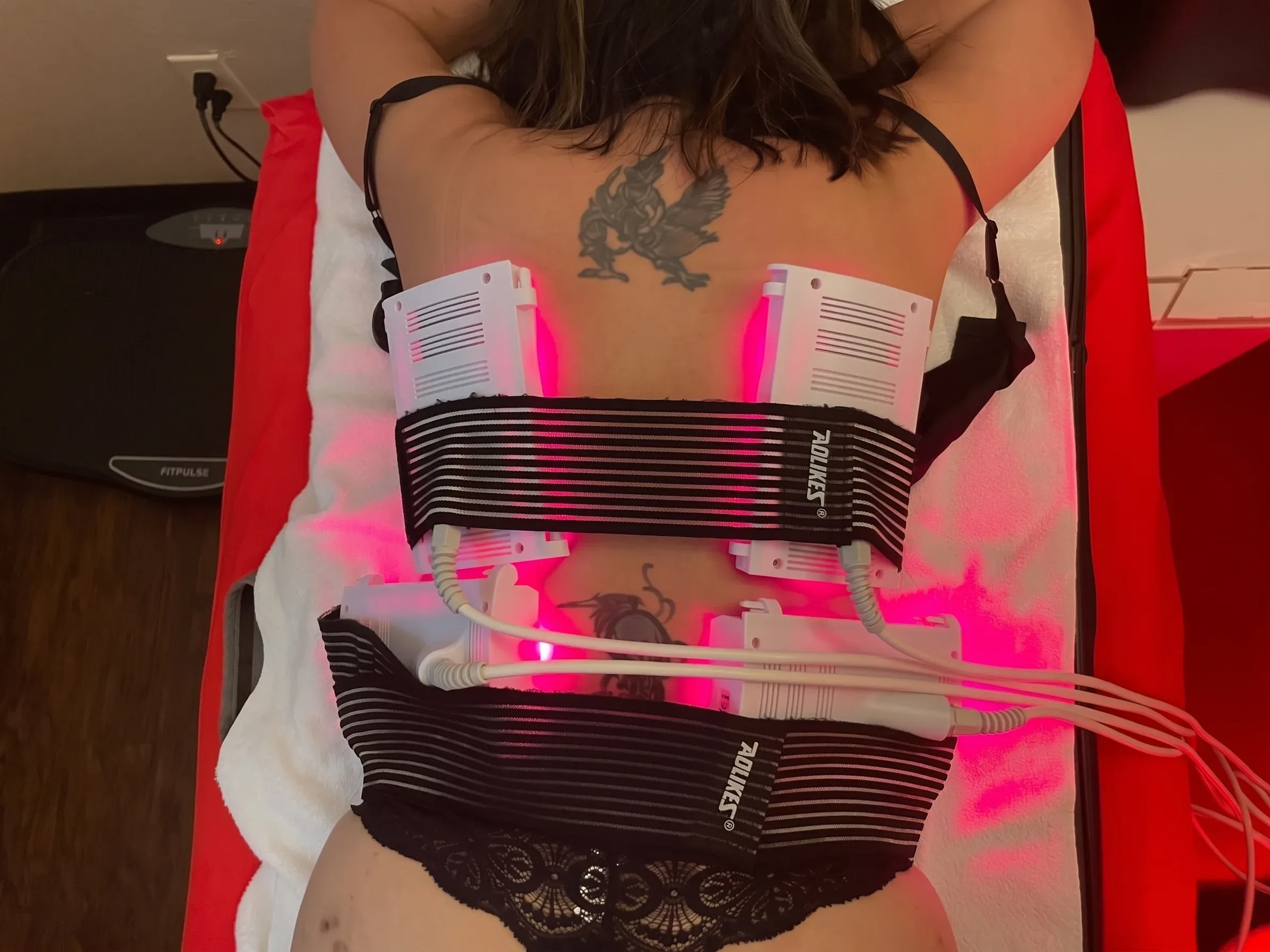
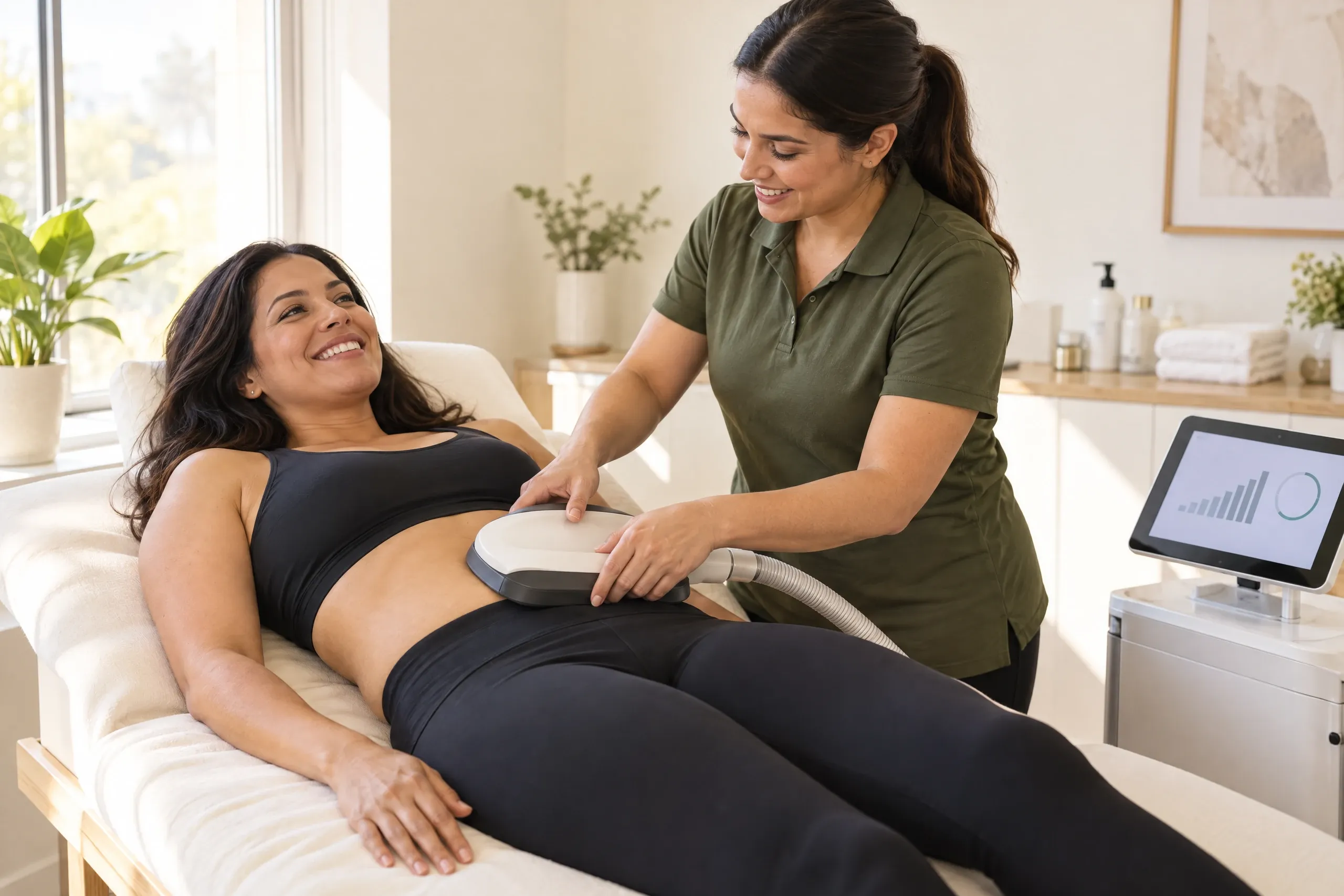
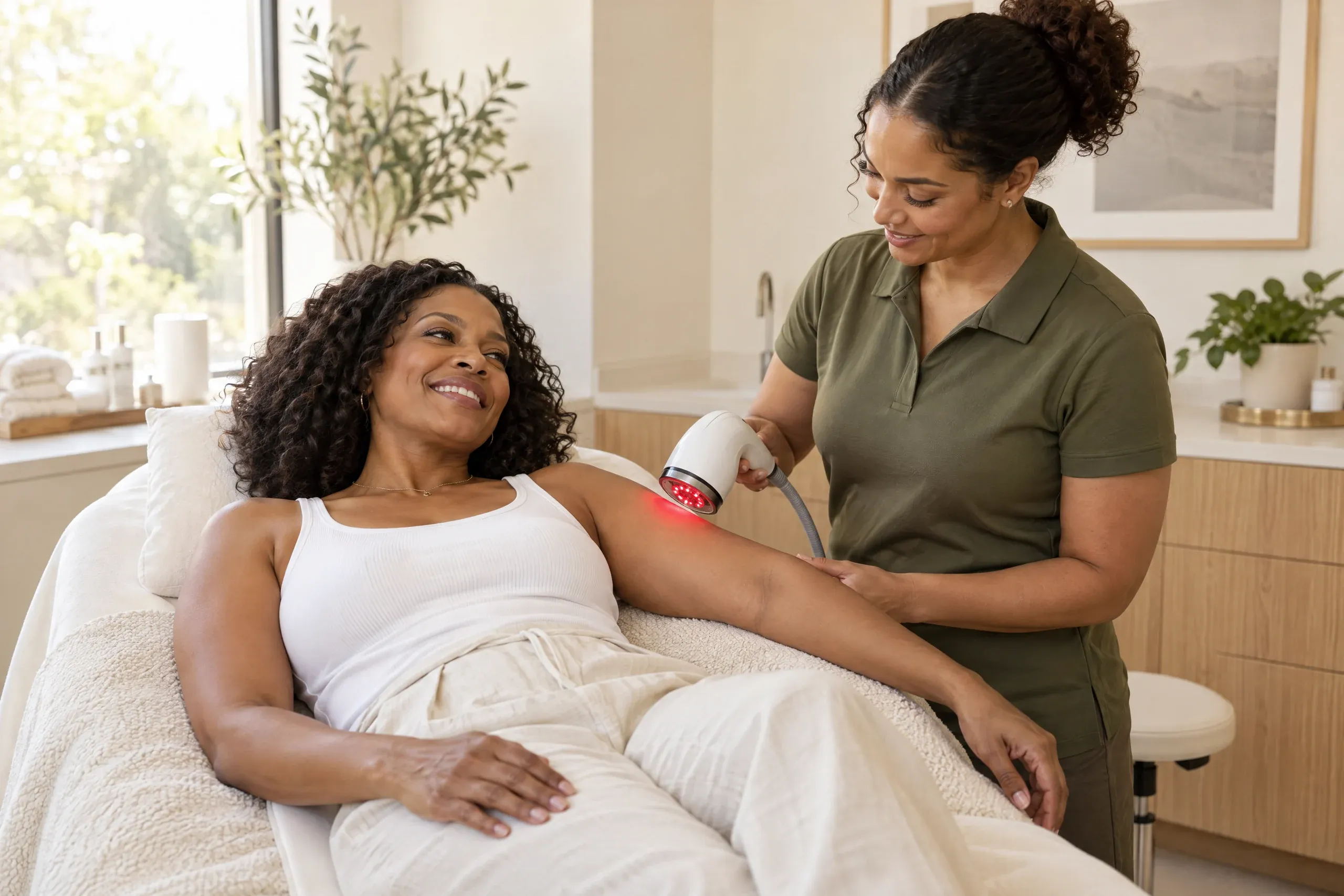
Light-based tightening delivers red and near-infrared wavelengths into the dermis, where they stimulate fibroblasts to produce new collagen and elastin. The tissue thickens and firms over weeks as the new matrix forms, which reduces how visible contour irregularity is. It is gradual by nature: you are not shrinking skin, you are rebuilding what supports it. Published work on red light photobiomodulation reports improvement in skin aging signs, wrinkle depth and dermal density, and studies of energy-based tightening devices report measurable improvement in mild to moderate laxity.
At Aspire Trim Clinic we deliver this on the invisa-RED infrared and red light platform, which is FDA cleared for the indications we offer, and clearance status for any device can be verified in the FDA 510(k) clearance database. Sessions are comfortable, take 20 to 40 minutes, and require no downtime at all. Read more about non-surgical skin tightening in Charlotte, NC.
Collagen Support From the Inside
Working from the inside adds a second lever. Skin rebuilds collagen from protein, vitamin C and adequate hydration, so the nutrition plan matters as much as any session. Where it is appropriate, Impact Health Network licensed physicians can prescribe support for collagen and skin quality, and our coaches track it alongside your training and nutrition.
Effects here are modest rather than dramatic, and they take twelve to twenty four weeks because dermal collagen turnover is slow. Judging a skin plan at week three is the most common mistake. Explore skin and longevity support in Charlotte, NC for how we grade the evidence honestly.
Nutrition, Hydration and Strength Training
Collagen synthesis needs raw materials, which means adequate protein and vitamin C. Hydration affects skin appearance measurably. And resistance training is the highest-yield item on this list, because filling the space under the skin with muscle changes how it drapes in a way no treatment can replicate. Research comparing medication-driven weight loss with caloric restriction has specifically examined skeletal muscle outcomes, and the practical conclusion is consistent: protein and resistance work decide how much of your loss was fat rather than muscle, and therefore how your body looks at the end of it.
Non-Surgical vs Surgical: How to Decide
The test is not sophisticated. Sit down, relax, and see what you can gather. Skin that feels thin or crepey without significant surplus is the most responsive category and does well with a tightening course. A slight fold when seated is mild to moderate laxity, where a course typically produces worthwhile improvement. A substantial handful of loose tissue, or skin that chafes and causes rashes, is surplus rather than laxity, and no course of non-surgical sessions resolves that.
There is also a large middle ground where treatment produces real but partial improvement, and clients deserve that described accurately rather than optimistically. We assess skin elasticity at consultation and tell you which category you are in, including the cases where a plastic surgery referral is the honest recommendation. Guidance on cosmetic procedures from the American Academy of Dermatology is a sensible reference before booking anywhere.
What to Expect From a Skin-Tightening Plan
Timing is the first decision, and it is the one clients most often get wrong. If your weight is still dropping meaningfully, wait. Treating skin while volume is still changing underneath means the course gets spent at the wrong moment. Within the last ten or fifteen pounds, starting is reasonable.
Once started, most courses run eight to twelve sessions across six to twelve weeks. Texture typically changes at four to six weeks, and firming builds across twelve to twenty four weeks, often continuing after the course finishes because collagen remodeling is slow. Nothing visible happens in week one, which is why we take standardized baseline photographs: at review you compare images rather than memories. New collagen persists, but skin continues to age, so periodic maintenance sessions hold the result. Read about loose skin treatment in Charlotte, NC for how we grade candidacy, or our body programs at Aspire Trim Clinic for the wider range.
Frequently Asked Questions About Loose Skin After Weight Loss
Can you tighten loose skin after weight loss?
Mild to moderate laxity, yes, using light or energy-based tightening to stimulate new collagen alongside protein, resistance training and collagen support. Significant surplus skin cannot be removed non-surgically, because there is no mechanism by which light energy makes excess tissue disappear. An honest elasticity assessment tells you which category applies.
How do you tighten loose skin without surgery?
Light-based skin tightening is the primary tool, stimulating fibroblasts to build new collagen over weeks. Combine it with adequate protein, vitamin C, hydration, sun protection and resistance training to fill the space underneath. Physician-prescribed skin and longevity support, coordinated through Impact Health Network, can add a modest further effect.
Does loose skin go away on its own?
Partly, and the amount varies widely. Younger clients losing moderate weight gradually often see meaningful retraction over six to twelve months, and waiting that long before treating is genuinely sensible. Older clients after large or rapid losses see less, and what remains at twelve months is broadly what will remain.
Does red light therapy tighten skin?
It supports skin quality and firmness through collagen stimulation, with published work reporting improvement in skin aging signs, wrinkle depth and dermal density. Whole-body red light sessions are gentler than targeted tightening protocols, so most clients use a targeted course for laxity and red light for general skin quality and maintenance.
How long does non-surgical skin tightening take to work?
Texture usually changes at four to six weeks, with firming building across twelve to twenty four weeks and often continuing after the course ends. Nothing visible happens in the first two weeks because collagen synthesis and remodeling are slow processes. Standardized baseline photography makes the change assessable at review.
Does nutrition help with skin firmness?
Modestly, and it is the cheapest lever available. Adequate protein and vitamin C give skin the raw materials for collagen, hydration changes how skin looks within days, and resistance training fills the space underneath. Where Impact Health Network licensed physicians prescribe additional skin and longevity support, we coach it alongside those habits. None of it retracts excess skin, and we are clear about that before anyone spends money.
Will I get loose skin on a medically supervised weight-loss program?
It depends on how much weight you lose, how fast, your age and how well you protect lean mass. Rapid loss gives skin less time to adapt, which is why we set protein targets and a resistance training minimum from week one on every medically supervised weight-loss program and track lean mass on body composition scans.
Book a Skin Tightening Consultation in Charlotte, NC
Before you spend anything, get an honest assessment. Book a free consultation at Aspire Trim Clinic in Matthews, minutes from Charlotte, and we will assess your skin elasticity, take baseline photographs, and tell you plainly whether a tightening course is worth it or whether a surgical opinion is the better answer. Call (704) 321-0105 or request your consultation online. Learn more about non-surgical skin tightening in Charlotte, NC.