Muscle and Joint Recovery Support in Charlotte, NC: Recover Faster, Perform Stronger
How Coaching Fits Your Muscle & Joint Recovery Program
Your coach, your check-ins, your numbers
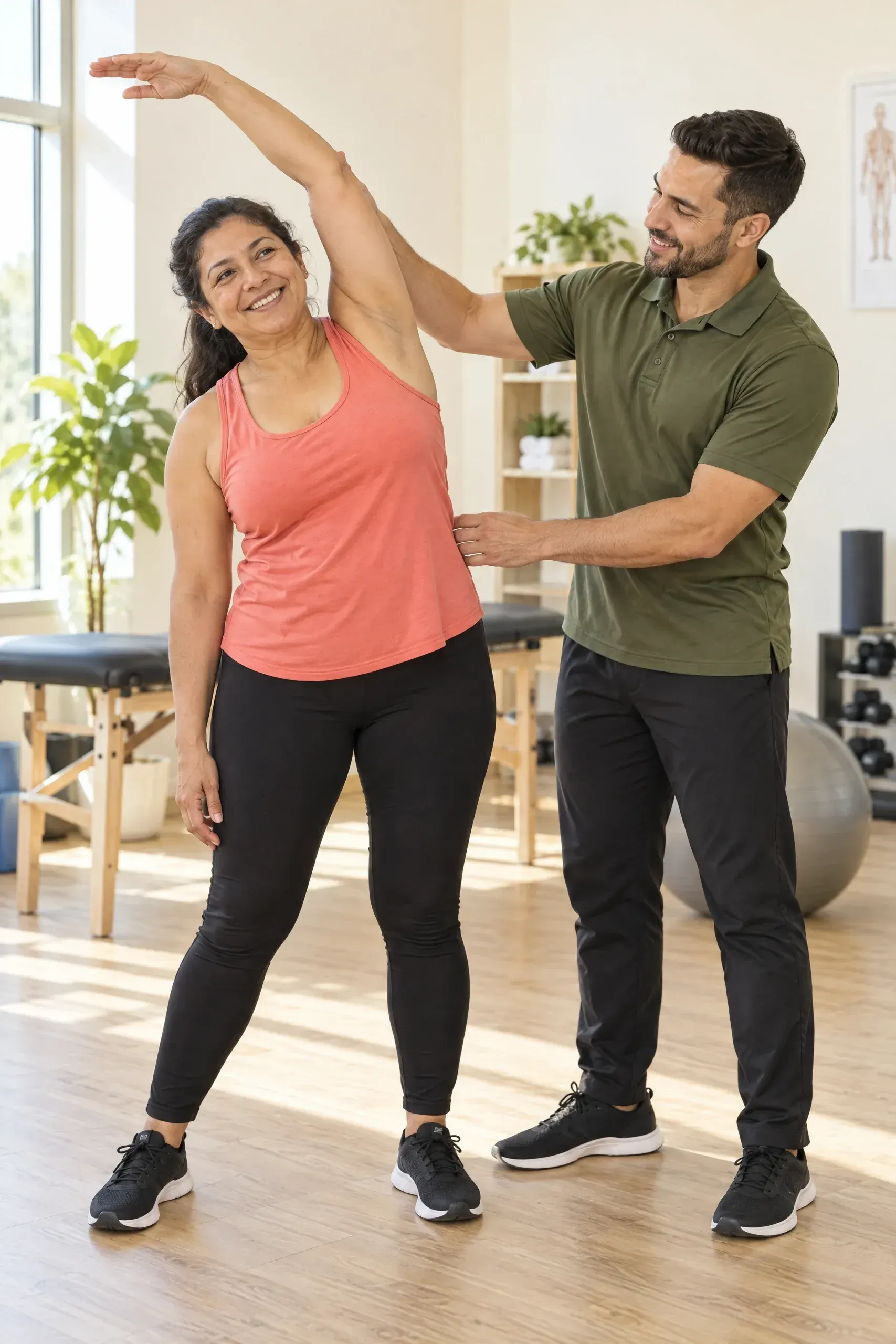
Your first visit is a goal-setting session with Brent Mague and a Styku 3D body composition scan that baselines lean mass, so recovery is measured rather than guessed. Olivia Mague maps your current training load and the joints that keep flaring, and Jillian Harrell sets a protein target that fits your schedule. From that we build an 8 to 12 week plan covering training, recovery days, sleep and red light sessions, and show how it fits our weight loss coaching packages.
Check-ins run every two weeks, in person or by video, with a rescan at the midpoint and the end. We track soreness, training volume, sleep and how each joint handles load. If progress stalls, the plan changes: volume comes down, mobility work or extra red light sessions go in, or protein and sleep get revisited. Any question about labs, prescribed support or a nagging injury goes to Impact Health Network licensed physicians, and we arrange the visit. See how it works at Aspire Trim.
What Is Muscle & Joint Recovery Support?
Recovery capacity, measured and coached
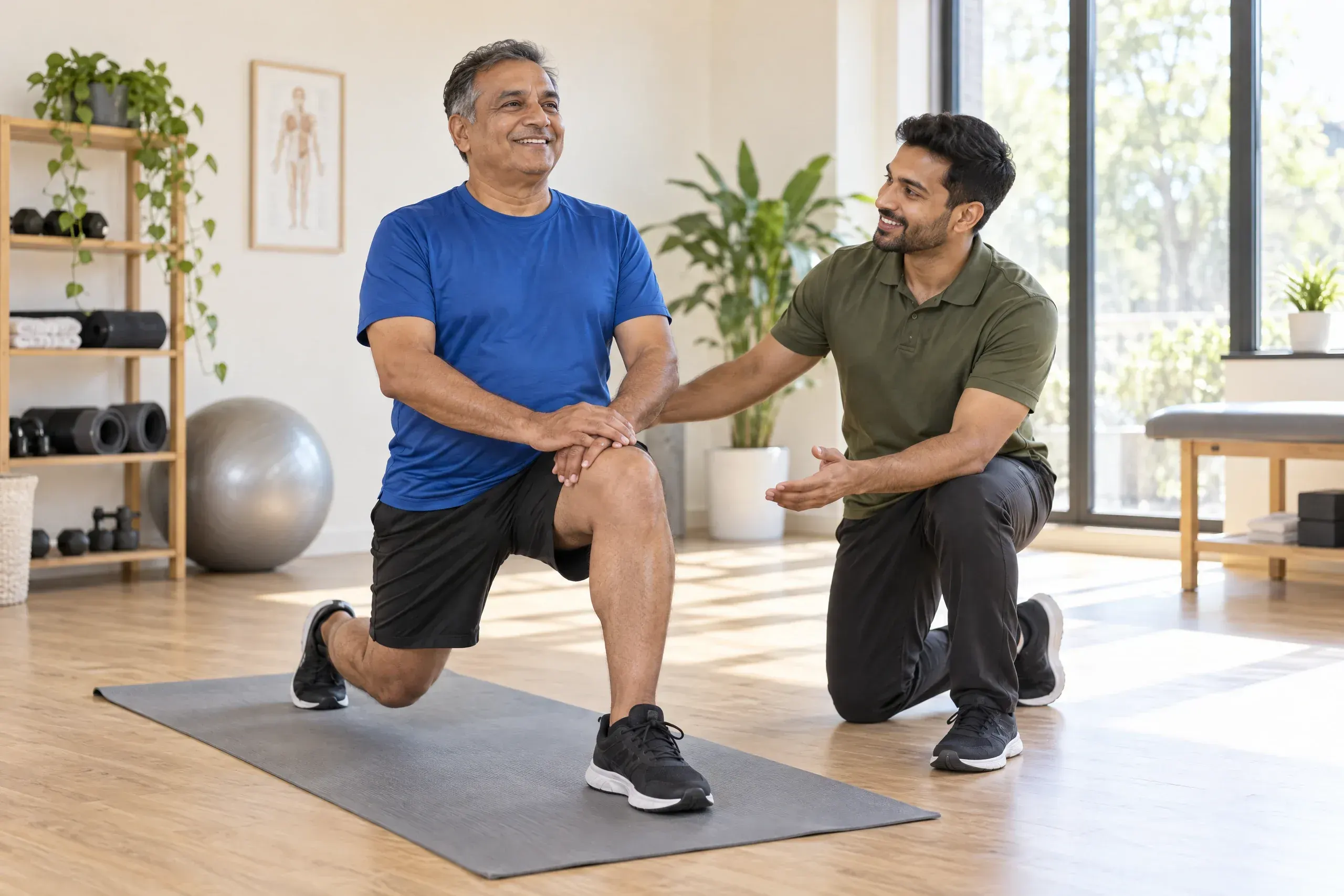
Muscle and joint recovery support is a coached 8 to 12 week program for active adults whose recovery has fallen behind their training. It covers three outcomes: energy and recovery capacity, muscle and joint recovery, and immune and inflammation balance. Impact Health Network licensed physicians handle labs and prescribe support where appropriate. Aspire coaches the rest.
Coaching means a Styku scan to baseline lean mass, a training load review, a protein target, a sleep plan and scheduled red light therapy in Charlotte, NC. Many clients notice easier recovery within two to three weeks. Joint change takes the full program. Individual results vary.
Program Timeline:
First Signs:
2 to 3 weeks (easier recovery)
Full Effect:
8 to 12 weeks (joint change)
Session Time:
45 to 60 minutes (per check-in)
Downtime:
None (keep training)
Benefits of Muscle & Joint Recovery Support
Beyond the training log
Outcome-Based Plan
Built around energy, muscle and joint recovery, and inflammation balance, not a product list
Physician Partner
Labs and any prescribed support come from Impact Health Network licensed physicians
Research-Vetted
Robyn Mague, Head of Research, reviews the evidence behind every recommendation
Training Integration
Exercise science staff build the loading and mobility plan around your schedule
Measured Progress
Styku scans and two-week check-ins decide whether the plan changes or continues
Honest About Limits
If an injury needs a physician or physical therapist, we say so before anything else
Muscle & Joint Recovery Support vs Other Recovery Options
An honest comparison
| Treatment | Mechanism | Time | Results | Duration | Downtime | Best For |
|---|---|---|---|---|---|---|
| Muscle & Joint Recovery Support | Physician-prescribed support where appropriate, plus coaching on load, protein, sleep and red light | 8 to 12 week program, check-ins every 2 weeks | Easier recovery in 2 to 3 weeks, joint change over the program | Reassessed at the end of the program | None | Active adults whose recovery has fallen behind their training |
| Red Light Rejuvenation | Photobiomodulation of mitochondria in local tissue | 20 to 30 minute sessions | Recovery benefit within days, cumulative | Ongoing sessions | None | Whole-body recovery and mild joint discomfort |
| Functional Wellness with Emsculpt Neo | HIFEM muscle re-education with synchronized radiofrequency, per BTL | Four 30-minute sessions, 5 to 10 days apart | Core strength and movement gains across the series | Maintenance sessions as advised | None | Core strength, posture and movement after inactivity or injury |
| Physical therapy (external provider) | Loading, mechanics and progressive tissue tolerance | Sessions plus home program | Strong long-term outcomes for most joint pain | Ongoing | None | Almost everyone, as the foundation of any plan |
| Rest alone | Time off load with no structured progression | Days to weeks | Short-term relief that often returns under load | Until the next flare | None | Acute flares before assessment, not a long-term plan |
Who Is a Good Candidate for Muscle & Joint Recovery Support?
This program suits active adults with soft tissue or joint complaints that have not resolved with rest, loading and time, and anyone whose energy and recovery no longer match their training. Impact Health Network licensed physicians review your health survey, labs and history before anything is prescribed, and may amend or decline a recommendation.
Ideal Candidates for Muscle & Joint Recovery Support
- Active adults over 35 recovering more slowly than they used to
- Tendon or joint pain with no structural tear
- Strength gains stalled despite consistent training
- Losing weight quickly and wanting to protect lean mass
- Willing to do the resistance training and track sleep and protein
Who Should Wait or Get Assessed First
- Joint pain that has never been imaged or assessed
- A suspected tear, locking joint or recent acute injury
- Pregnancy or breastfeeding
- Active or hormone-sensitive cancer history (physician review required)
- Athletes tested under an anti-doping code, until the physician reviews the plan
What We Check Before Recovery Support Starts
- That the injury has been assessed by a physician or physical therapist
- Labs and history reviewed by Impact Health Network licensed physicians
- Whether rest and loading had a fair trial
- The loading plan that runs alongside
- A program length with a rescan and review date
If your pain has never been properly assessed, start there. The American College of Sports Medicine frames training load, nutrition and sleep as one system, and so do we, but an undiagnosed injury comes first. Read more about joint pain and recovery or how we approach inflammation and immune support.
How the Muscle & Joint Recovery Support Program Works
From assessment to rescan
Free Consultation
Assessment and Labs
Coaching Plan
Check-Ins
Rescan and Review
Muscle & Joint Recovery Support Safety and Limits
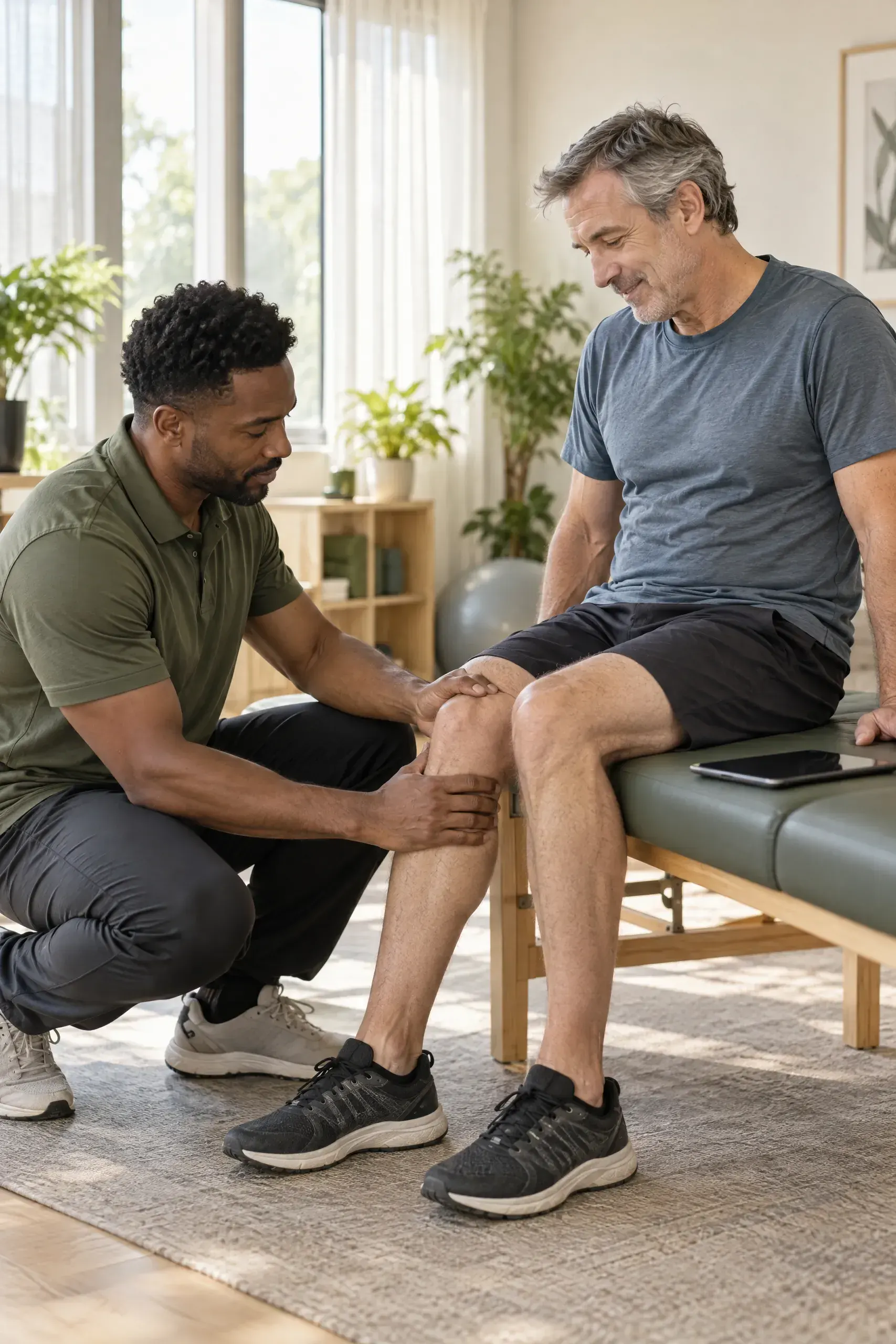
The coaching side of this program is low risk. The more important safety conversation is about knowing when a problem is beyond coaching, and we would rather have it early.
Common, Expected Effects
Changing training load can bring a short period of extra soreness while tissue adapts, and we keep increases gradual for that reason. Red light sessions may leave mild warmth in the area for a short time. Protein and sleep changes occasionally cause a week of adjustment.
Anything prescribed by Impact Health Network licensed physicians carries its own considerations, which the physician explains at your telehealth visit along with what to watch for. We log any effects you report at each check-in and pass them back to the physician.
How We Monitor
Baseline labs and a health survey go to the physician before anything is prescribed. Two-week check-ins track soreness, swelling, sleep and how each joint responds to load, and the midpoint rescan shows whether lean mass is moving the right way. If something is not improving, the plan changes rather than continuing on hope.
When an Injury Needs More Than Coaching
Sharp pain, a joint that locks or gives way, swelling that does not settle, numbness, or pain that wakes you at night need a physician or physical therapist, not a coaching plan. The National Institute of Arthritis and Musculoskeletal and Skin Diseases describes the signs that separate everyday soreness from an injury that needs care, and we use the same line. Contact us for any new or persistent symptom, and see our recovery and performance programs for how the pieces fit together.
Muscle & Joint Recovery Support Investment and Financing in Charlotte, NC
What shapes your plan
Your plan depends on what Impact Health Network licensed physicians prescribe after your assessment and labs, if anything, how many red light sessions fit your recovery goal, and whether you add a coaching package or membership tier for the training, protein and sleep work. Coaching and two-week check-ins are included in every program. Exact investment is discussed at your free consultation after your body composition scan.
What is included
- Free consultation and Styku 3D body composition scan
- Assessment and labs through Impact Health Network licensed physicians, with prescribed support where appropriate
- Training load, protein and sleep coaching from our exercise science and dietitian team
- Scheduled red light sessions as part of the plan
- Check-ins every two weeks, in person or by video
- Rescans at the midpoint and the end of the program
Flexible payment options
Cherry payment plans are our primary financing option, with a quick application that does not affect your credit score. PatientFi and Klarna are also available. Review our financing options or ask at your consultation. If Red Light Rejuvenation on its own would do the job, we will tell you.
Why Choose Aspire Trim Clinic for Muscle & Joint Recovery Support in Charlotte, NC
Both owners are lifelong athletes, and Robyn Mague's own history of sports injury and rehabilitation is what drove her into recovery research. Brent Mague competed and coached for decades before founding Aspire. We have been the person with the shoulder that will not heal, and we coach like it.
Dedicated Research Lead
Our Head of Research vets every recommendation against current published evidence
Exercise Science On Staff
A kinesiology graduate and an ACSM exercise physiologist build the loading plan
Medical Partner When Needed
Impact Health Network licensed physicians handle labs, prescriptions and medical decisions
Progress Is Measured
Scans, soreness logs and training data decide whether the plan continues or changes
Related Programs in Matthews
Programs clients most often pair with muscle and joint recovery support.
Red Light Rejuvenation
Short, comfortable invisa-RED sessions for training recovery, skin renewal and everyday energy, coached around your week.
- Active adults who want better recovery between training sessions, often alongside sports recovery in Charlotte, NC
- Anyone wanting better skin quality without downtime
- Minor joint aches that limit training, see our joint pain and recovery support
Functional Wellness with Emsculpt Neo
Emsculpt Neo applied for core and lower back support, posture and everyday strength, coached by the Aspire Trim Clinic team in Matthews.
- Active adults, often over 40, who want a steadier core and better posture
- Desk workers and drivers whose lower back feels drained by the end of the day
- Recreational athletes who want core and hip strength without more training volume
3D Body Composition Scan (Styku)
Where every Aspire program begins: body fat, lean mass and 33 measurements in 30 to 40 seconds, with no radiation.
- Starting a program and wanting a baseline
- Losing weight fast and tracking lean mass
- Scale has stalled but clothes fit differently
Muscle & Joint Recovery Support Questions, Answered
Before your consultation
How much does muscle and joint recovery support cost in Charlotte, NC?
Exact investment is discussed at your free consultation after your body composition scan, because the plan depends on what Impact Health Network licensed physicians prescribe, if anything, and how many coaching and red light sessions you need. Cherry payment plans are our primary financing option, with PatientFi and Klarna also available. See our financing options for details.
How long does the recovery support program last?
Most programs run eight to twelve weeks, which matches how long soft tissue takes to show meaningful change. Check-ins happen every two weeks, with a rescan at the midpoint and the end. We reassess soreness, function and lean mass at the finish and only extend when the numbers justify it, rather than continuing by default.
What is prescribed, and who prescribes it?
Any prescribed support comes from Impact Health Network licensed physicians after they review your health survey, labs and history, and it is chosen by outcome: energy and recovery capacity, muscle and joint recovery, or immune and inflammation balance. Aspire does not prescribe anything. We arrange the telehealth visit, coach the plan around it and track whether it is working.
Is there any pain or downtime?
No downtime. You keep training on a schedule we adjust together, and red light and coaching sessions are comfortable. If anything prescribed by Impact Health Network licensed physicians involves self-administration, you get a demonstration and written instructions first. Soreness from training should fall over the course of the program, not rise, and we track it at every check-in.
How soon will my joint feel better?
Easier recovery between training sessions typically comes first, at two to three weeks. Sleep often improves in the same window once the sleep plan takes hold. Change in a stubborn joint usually takes eight to twelve weeks because tissue remodels slowly. Judging the plan at week three is the most common mistake clients make, so we hold judgment for the midpoint rescan.
Will recovery support help me build muscle?
It supports the process rather than replacing it. Better recovery, sleep and a protein target raise how much productive training you can absorb, and that is where lean mass comes from. Without progressive resistance work the effect is small, which is why Olivia Mague builds the loading plan into the program and we track lean mass on Styku scans. Individual results vary.
How is this different from Red Light Rejuvenation on its own?
Red Light Rejuvenation is a standalone, session-based service. This program includes red light sessions as one tool inside a coached plan with labs, physician-prescribed support where appropriate, training load, protein and sleep coaching, and two-week check-ins. If red light alone would do the job, we tell you and save you the larger commitment.
Is this only for athletes?
No. Most clients are active adults in their 30s to 60s who train a few times a week, work physical jobs or are returning from an old injury, not competitive athletes. Men and women join in roughly equal numbers. If you do compete under an anti-doping code, tell us at the consultation so the Impact Health Network physician can take that into account.
What if my pain has never been assessed?
Get it assessed first. A coaching program is not the right response to an undiagnosed structural tear, and we will say so. Bring any imaging or specialist reports to the consultation. If what you describe needs a physician or a physical therapist, we tell you that instead of starting a program, and Impact Health Network licensed physicians can be part of that review.
Can I combine recovery support with a weight loss program?
Yes, and it is a sensible pairing. Rapid weight loss costs lean mass, and protecting muscle during our weight loss program in Charlotte, NC is one of the better reasons to add recovery coaching. Impact Health Network licensed physicians review both together, and we track lean mass on Styku scans to see whether it is working.
Do I need labs before starting?
Yes. Baseline bloodwork and a health survey go to Impact Health Network licensed physicians, who decide whether any prescribed support is appropriate at all. The results also give us a comparison point for later in the program. Clients who arrive with recent labs can often use those. Aspire arranges the visit, and the physician makes the decision.
Schedule Your Muscle & Joint Recovery Support Consultation
References
- Dupuy et al., Front Physiol. (2018). An Evidence-Based Approach for Choosing Post-exercise Recovery Techniques to Reduce Markers of Muscle Damage, Soreness, Fatigue, and Inflammation: A Systematic Review With Meta-Analysis. PMID: 29755363.
- Afonso et al., Front Physiol. (2021). The Effectiveness of Post-exercise Stretching in Short-Term and Delayed Recovery of Strength, Range of Motion and Delayed Onset Muscle Soreness: A Systematic Review and Meta-Analysis of Randomized Controlled Trials. PMID: 34025459.
- Messier et al., JAMA. (2021). Effect of High-Intensity Strength Training on Knee Pain and Knee Joint Compressive Forces Among Adults With Knee Osteoarthritis: The START Randomized Clinical Trial. PMID: 33591346.
- Raposo et al., Musculoskeletal Care. (2021). Effects of exercise on knee osteoarthritis: A systematic review. PMID: 33666347.
- Masala et al., Sci Rep. (2020). Inflammatory marker changes in a 24-month dietary and physical activity randomised intervention trial in postmenopausal women. PMID: 33318523.
- Ferlito et al., Lasers Med Sci. (2022). Comparison between cryotherapy and photobiomodulation in muscle recovery: a systematic review and meta-analysis. PMID: 34669081.
- Deutz et al., Clin Nutr. (2014). Protein intake and exercise for optimal muscle function with aging: recommendations from the ESPEN Expert Group. PMID: 24814383.