How to Lose Weight After 40: Why It Feels Harder and What Actually Changes
Muscle, metabolism, hormones, sleep and stress all shift after 40, which is why eating less and moving more stops working. Here is what actually changes and how a measured, coach-led plan handles it.
To lose weight after 40, measure body composition first, then build the plan around three levers: enough protein at every meal, two to three strength sessions a week, and real recovery. It feels harder after 40 because muscle declines, resting metabolism drifts down with it, hormones shift, and sleep and stress worsen together. The fix is not eating less and moving more until you break. It is a measured, coach-led plan, with a medical layer from Impact Health Network licensed physicians where appropriate. At Aspire Trim Clinic near Charlotte, NC, that plan starts with a 3D scan.
The "I Eat the Same and Gain Weight" Moment
Most people over 40 can name the moment. The jeans that fit last spring do not. The eating is the same, the walking is the same, and the scale is up eight pounds anyway. The usual response is to repeat what worked at 28: cut calories hard, add cardio, white-knuckle it for six weeks. It works a little, then stalls, then reverses, and the conclusion becomes "my metabolism is broken."
It is not broken. Several things did change, and none of them respond well to the old approach. Here is what actually changes after 40, why the old method stops working, and what a coach-led program in Charlotte, NC does differently.
What Actually Changes After 40
Six things move at once, and they compound each other.
Muscle Loss and Resting Metabolism
Adults begin losing muscle in their thirties, and the pace picks up after 40 unless strength training pushes back. The National Institute on Aging describes this decline in muscle and strength as a normal process that exercise and nutrition can slow. Muscle matters for weight because it is metabolically active tissue. A review of energy expenditure and aging found that the drop in resting metabolism with age is explained largely by lost lean mass, not a separate slowdown (PMID: 19698803). The metabolism did not break. It shrank because the engine got smaller.
Hormones
For women, the menopause transition shifts where fat is stored even when total weight barely changes. A cohort study tracking women across the transition found fat moving toward the abdomen and lean mass declining as estrogen fell (PMID: 34061966). For men, testosterone drifts down gradually from the thirties, which makes keeping muscle harder and often shows up as lower energy and drive. Neither is a diagnosis you can make from a blog post. Our page on hormonal balance after 40 explains how coaching and medical care fit together; labs, where appropriate, are ordered by Impact Health Network licensed physicians.
Sleep, Stress and Recovery Time
The forties bring aging parents, teenagers, peak career demands and less sleep than any decade before. Short sleep raises hunger signals and lowers the hormones that tell you that you are full, so the same meals feel less satisfying. Chronic stress keeps cortisol elevated, which favors abdominal fat and makes cravings louder. And recovery slows: a hard workout at 45 takes longer to bounce back from than at 25, which quietly reduces how much you move the rest of the week.
Why the Old Approach Stops Working
"Eat less, move more, repeat" fails after 40 for a specific reason. A large calorie cut without enough protein or strength work makes the body give up muscle along with fat. Less muscle means a lower resting metabolism, so the deficit that worked in week one is smaller by week six. Research on adaptive thermogenesis shows the body also reduces energy expenditure beyond what the lost weight alone predicts, at least for a period after dieting (PMID: 33762040). You end up eating less than ever while losing less than before.
Then the diet ends, and the weight comes back as fat rather than the muscle you lost. Each cycle leaves slightly less muscle and slightly more fat at the same weight, which is why "I eat the same and gain weight" is literally true for many people. The answer is not a bigger cut. It is a smarter one, measured properly.
Measure First: What a Body Composition Scan Tells You That the Scale Cannot
The bathroom scale reports one number and hides the one that matters. Two people at the same weight can carry very different amounts of muscle and fat, and the one with more muscle keeps the weight off. That is why every program at Aspire starts with a 3D body composition scan in Charlotte, NC.
The Styku scan takes 30 to 40 seconds on a slowly rotating platform. It is radiation-free and contactless, and it produces body fat percentage, lean mass, circumferences at the waist, hips, arms and thighs, and a 3D model you can compare visit to visit. For clients over 40 this is the difference between guessing and knowing: you can see whether a plan is costing you muscle before the scale tells you anything. Stop guessing. See where you are, then build the plan with your coach. Read how a first visit works or how we coach you through losing weight.
Protein, Strength and Recovery: The Three Levers That Matter Most After 40
Once you know your numbers, three levers do most of the work.
Protein. Older muscle responds less to a given dose of protein, which researchers call anabolic resistance. The practical answer is more protein, spread across the day. The ESPEN expert group recommends higher protein intakes for adults as they age, paired with exercise, to maintain muscle function (PMID: 24814383). For adults who are training and losing weight, common guidance lands between 1.2 and 1.6 grams per kilogram of body weight per day, with 25 to 40 grams per meal. Our registered dietitian, Jillian Harrell, MS, RD, LDN, sets your target and builds meals around it.
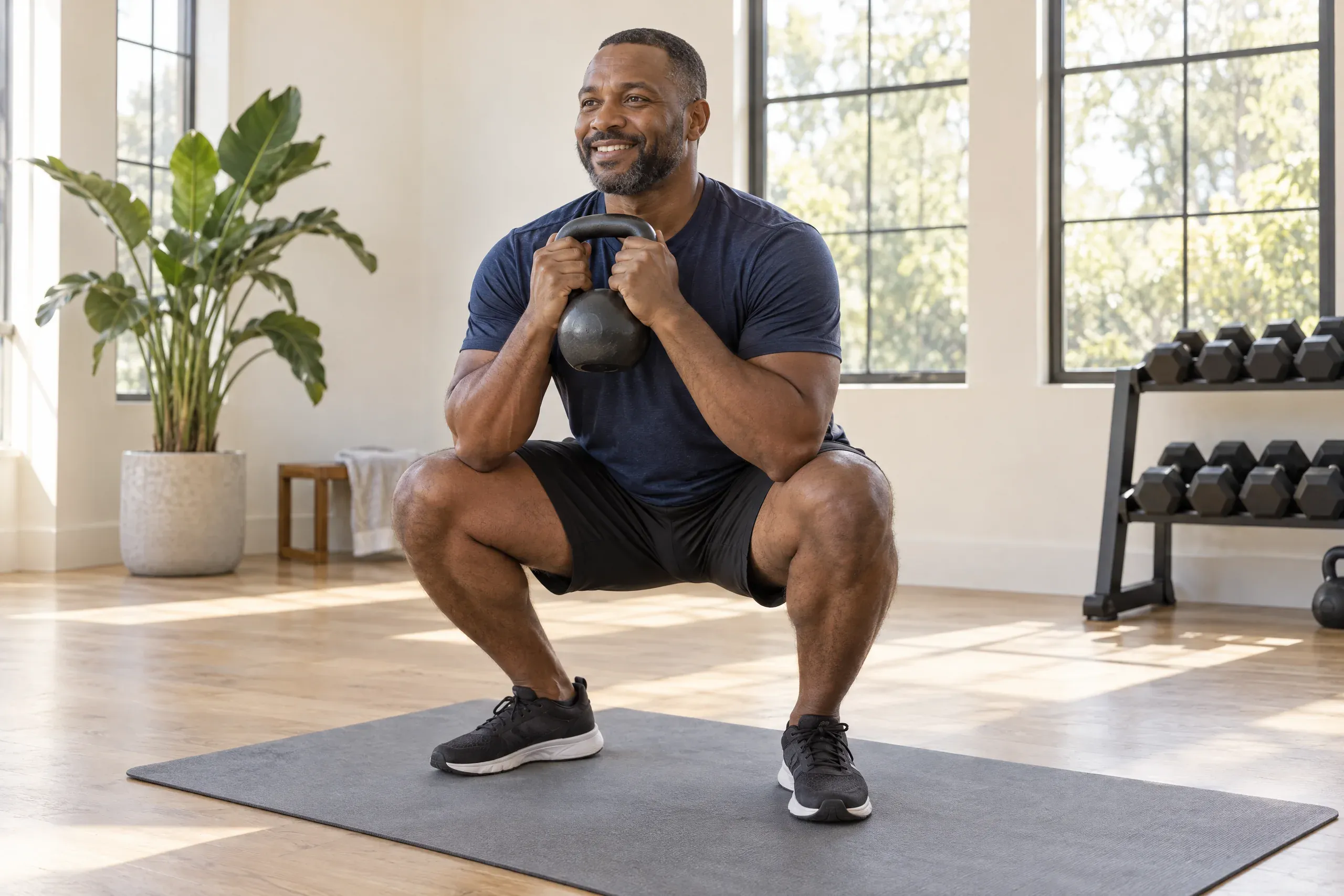
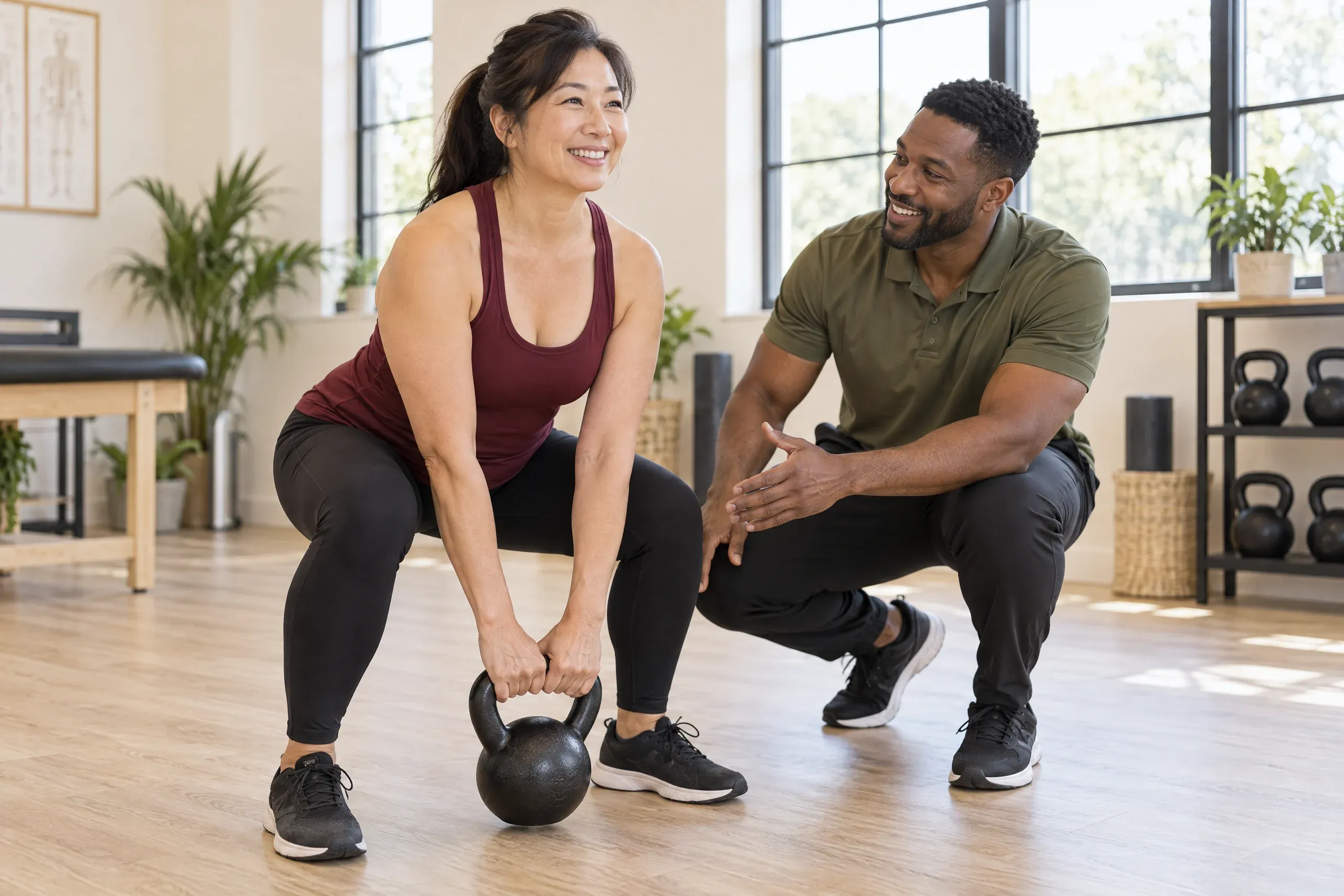
Strength. Two to three full-body strength sessions a week is the minimum that protects muscle during weight loss. It does not require hours in the gym; it requires progressive resistance and consistency. Cardio still helps, but strength keeps your resting metabolism from shrinking as the weight comes off.
Recovery. Seven or more hours of sleep, planned rest days and a way to lower stress are not soft extras after 40. They are the conditions under which the first two levers work, and we coach them as seriously as food and training.
When a Provider-Guided Program Makes Sense, and the Injection-Free Alternative
Coaching alone works for many clients. For others, especially those carrying significant extra weight, with a long history of regain, or with hormone changes in the picture, a medical layer helps. In our coach-led weight loss program, Impact Health Network licensed physicians review your health history and labs through a telehealth visit we arrange, and prescribe weight loss medication where appropriate. Aspire coaches, measures and tracks the plan around the physician's decision, with protein targets and strength work so the weight you lose is fat rather than muscle.
If you would rather avoid injections and prescriptions, Thinnr is an injection-free weight loss protocol: a six-week program pairing a homeopathic oral drop with a structured, protein-forward nutrition plan. Thinnr reports that patients average about 20 lbs in 6 weeks, individual results vary. Claims for homeopathic products are based on traditional homeopathic practice and have not been evaluated by the FDA. Your coach helps you choose between the two paths at your consultation. The CDC notes that gradual, steady loss is more likely to stay off than rapid loss, which is how both paths are coached here.
How Coaching and Check-Ins Turn a Plan Into a Result
Information is not the hard part. Doing it for twelve weeks while life happens is, and that is what coaching solves. Every client at Aspire has a goal-setting session with Brent Mague, MBA, ISSA Weight Management Specialist and Nutritionist, followed by scheduled check-ins at weeks 0, 3, 6, 8, 10 and 12. Each check-in includes a rescan, so you see whether fat is leaving and muscle is staying, and the plan adjusts before a plateau becomes a stall.
Between check-ins your coach is reachable and meal plans come from our registered dietitian. If progress stops, we look at sleep, stress, protein and training before we touch calories again. Our weight loss coaching packages page explains the levels of support.
Frequently Asked Questions About Losing Weight After 40
How do I lose weight after 40?
Measure body composition first, then build around protein, strength training and recovery rather than a hard calorie cut. Aim for protein at every meal, two to three strength sessions a week, seven or more hours of sleep, and a moderate deficit you can hold for months. Where appropriate, prescriptions from Impact Health Network licensed physicians or an injection-free protocol can support the plan.
Why is it harder to lose weight after 40?
Because several things change at once: muscle mass declines, resting metabolism drops with it, hormones shift, sleep gets shorter and stress gets higher. Each one alone is small. Together they mean the old approach of eating less and moving more produces smaller results and costs more muscle, which makes the next attempt harder still.
Does metabolism slow down after 40?
Resting metabolism does drift down, and research attributes most of that decline to lost muscle rather than a separate slowdown. That is good news, because muscle can be protected and rebuilt with strength training and adequate protein. People who keep their lean mass through midlife see far less metabolic change than people who diet repeatedly without training.
How much protein should I eat after 40?
Common guidance for adults who are training and losing weight is 1.2 to 1.6 grams of protein per kilogram of body weight per day, spread across meals at 25 to 40 grams each. Older muscle responds less to small doses, so distribution matters as much as the total. Our registered dietitian sets your exact target based on your scan and goals.
Can hormones cause weight gain after 40?
Hormone changes can shift where fat is stored and make muscle harder to keep, especially through the menopause transition for women and with gradually declining testosterone for men. They are rarely the whole story. Where appropriate, Impact Health Network licensed physicians order labs and handle any medical care, and we coach the nutrition, training and recovery around it.
What is the best exercise for weight loss after 40?
Strength training two to three times a week, combined with daily walking and whatever cardio you enjoy. Strength is the priority because it protects the muscle that keeps your resting metabolism up as the weight comes off. Sessions of 30 to 45 minutes with progressive resistance are enough, and recovery days count as part of the program.
How long does it take to see results?
Most clients see measurable change on their first rescan at week 3, often in waist circumference and body fat percentage before the scale moves much. Visible change typically builds across the 12-week program, and gradual loss is more likely to stay off. Individual results vary, which is why we measure every few weeks rather than guessing.
Book a Body Composition Scan in Charlotte, NC
Stop guessing. See exactly where you are with a 3D body composition scan, then build the plan with your coach. Book your scan and free consultation at Aspire Trim Clinic in Matthews, minutes from Charlotte, NC. Call (704) 321-0105 or request your appointment online, and learn more about a 3D body composition scan in Charlotte, NC. We serve Charlotte, Mint Hill, Stallings, Indian Trail, Weddington and Pineville.
Related Articles
- Why Am I Not Losing Weight? Common Causes and How to Break a Weight-Loss Plateau
- Building Muscle Without Hours in the Gym
- Red Light Therapy Benefits: What the Research Supports and What It Doesn't
References
- Manini, Ageing Res Rev. (2010). Energy expenditure and aging. PMID: 19698803.
- Greendale et al., J Clin Endocrinol Metab. (2021). Changes in Regional Fat Distribution and Anthropometric Measures Across the Menopause Transition. PMID: 34061966.
- Nunes et al., Br J Nutr. (2022). Does adaptive thermogenesis occur after weight loss in adults? A systematic review. PMID: 33762040.
- Deutz et al., Clin Nutr. (2014). Protein intake and exercise for optimal muscle function with aging: recommendations from the ESPEN Expert Group. PMID: 24814383.
- Centers for Disease Control and Prevention. (2026). Healthy Weight and Growth.
- National Institute on Aging. (2026). Health information on muscle, aging and physical activity.