Red Light Therapy Benefits: What the Research Supports and What It Doesn't
An honest look at red light therapy benefits: recovery, skin and joint comfort have real evidence behind them, fat loss and cure-all claims do not. Plus what a 15 to 20 minute session looks like at Aspire Trim.
Red light therapy benefits with reasonable research support include faster recovery from muscle soreness after hard training, improved skin texture and collagen density with repeated sessions, and modest relief of joint stiffness and discomfort. The evidence is weak or absent for claims that red light melts fat, cures disease or replaces sleep, nutrition and training. Red and near-infrared light give cells a small energy and signaling nudge, so results are gradual and depend on consistency. At Aspire Trim Clinic in Matthews, minutes from Charlotte, NC, we pair sessions with coaching so the habits around them do most of the work.
Why Red Light Is Everywhere, and Why the Claims Vary So Much
Red light panels used to live in physical therapy clinics. Now they are in gyms, spas and bedrooms, and the marketing has stretched to match. One brand promises faster recovery. Another promises fat loss, thicker hair and deeper sleep from the same ten minutes a day.
The claims vary because the dose varies. Wavelength, power output, distance, exposure time and number of sessions all change what the light does. A consumer panel used for three minutes at arm's length and a clinical device used for twenty minutes against bare skin are both called red light therapy, yet they deliver very different amounts of energy. Many studies are also small, and one positive result gets repeated as if it applied everywhere. This article sorts the findings into what holds up, what is early, and what is marketing.
How Red and Near-Infrared Light Interact With Cells
The technical term is photobiomodulation. Red light (roughly 630 to 680 nanometers) is absorbed mostly in the skin and the tissue just beneath it. Near-infrared light (roughly 800 to 1,000 nanometers) passes deeper into muscle and connective tissue. Neither heats tissue the way a cutting or resurfacing laser does, which is why sessions feel warm rather than hot.
Inside the cell, the light is absorbed by a mitochondrial enzyme called cytochrome c oxidase. That nudges the cell to produce slightly more ATP (its energy currency), releases a little nitric oxide that improves local blood flow, and switches on repair and anti-inflammatory signaling. A 2021 review of the molecular evidence describes this chain and notes that the response follows a dose curve: too little does nothing, and too much blunts the effect (PMID: 33436333). That is published research on photobiomodulation, not a brand claim, and it explains why more minutes under the panel is not better.
What the Research Supports: Recovery, Skin and Joint Comfort
Three areas have enough controlled trials and pooled analyses to say something useful. None are miracles. All are real.
Muscle Recovery and Soreness
Recovery is the best-studied use. A 2022 systematic review and meta-analysis compared photobiomodulation with cryotherapy (cold application) for muscle recovery and found light performed at least as well on markers of muscle damage and soreness (PMID: 34669081). A 2024 meta-analysis of randomized trials found that light applied before exercise improved muscle endurance and helped strength recover faster afterward (PMID: 38758297). In practice, clients notice the day-two heaviness after a hard leg session is smaller and shorter, which means they can train again sooner. It does not build muscle on its own.
Skin Texture and Collagen
Skin is the second well-supported area. A controlled trial assigned participants to red and near-infrared sessions or no treatment over 30 visits and measured skin roughness, fine lines and collagen density with ultrasound. The treated groups improved on all three, with a measurable increase in intradermal collagen (PMID: 24286286). The changes are gradual, take weeks, and concern skin quality and firmness rather than removing surplus skin. For that goal, our article on loose skin after weight loss explains where light fits and where it does not.
Joint Comfort
Joint comfort is the third area, and dose matters more here than anywhere else. A 2019 meta-analysis of placebo-controlled trials found that low-level laser therapy reduced pain and disability in knee osteoarthritis when the dose matched published recommendations, and did little when under-dosed (PMID: 31662383). For clients with stiff mornings or cranky knees after training, this is a supportive tool to pair with movement and strength work, not a replacement for a medical evaluation. Our joint pain and recovery support page explains how we coach around it.
What the Evidence Does Not Support (or Not Yet)
Fat loss is the biggest overreach. Lying under a red light panel does not burn meaningful calories or shrink fat across the body. Body fat changes through energy balance, protein intake and training, and any clinic selling whole-body red light as a weight loss method is selling you a story. Targeted, FDA-cleared light-based body contouring protocols are a separate service with their own measured outcomes, not what people mean by red light therapy.
Cure-all language is the second problem. Claims about thyroid function, depression, dementia, immune strength and "detox" rest on early, small or inconsistent studies, and some rest on nothing at all. Energy is a common client report, and we take it seriously, but it is subjective and the trials are small. Sleep is similar: the plausible pathway runs through less soreness and a calmer evening, not a direct effect on melatonin. If a claim fixes everything, it is probably fixing nothing you can measure.
What a Red Light Session Looks Like at Aspire Trim
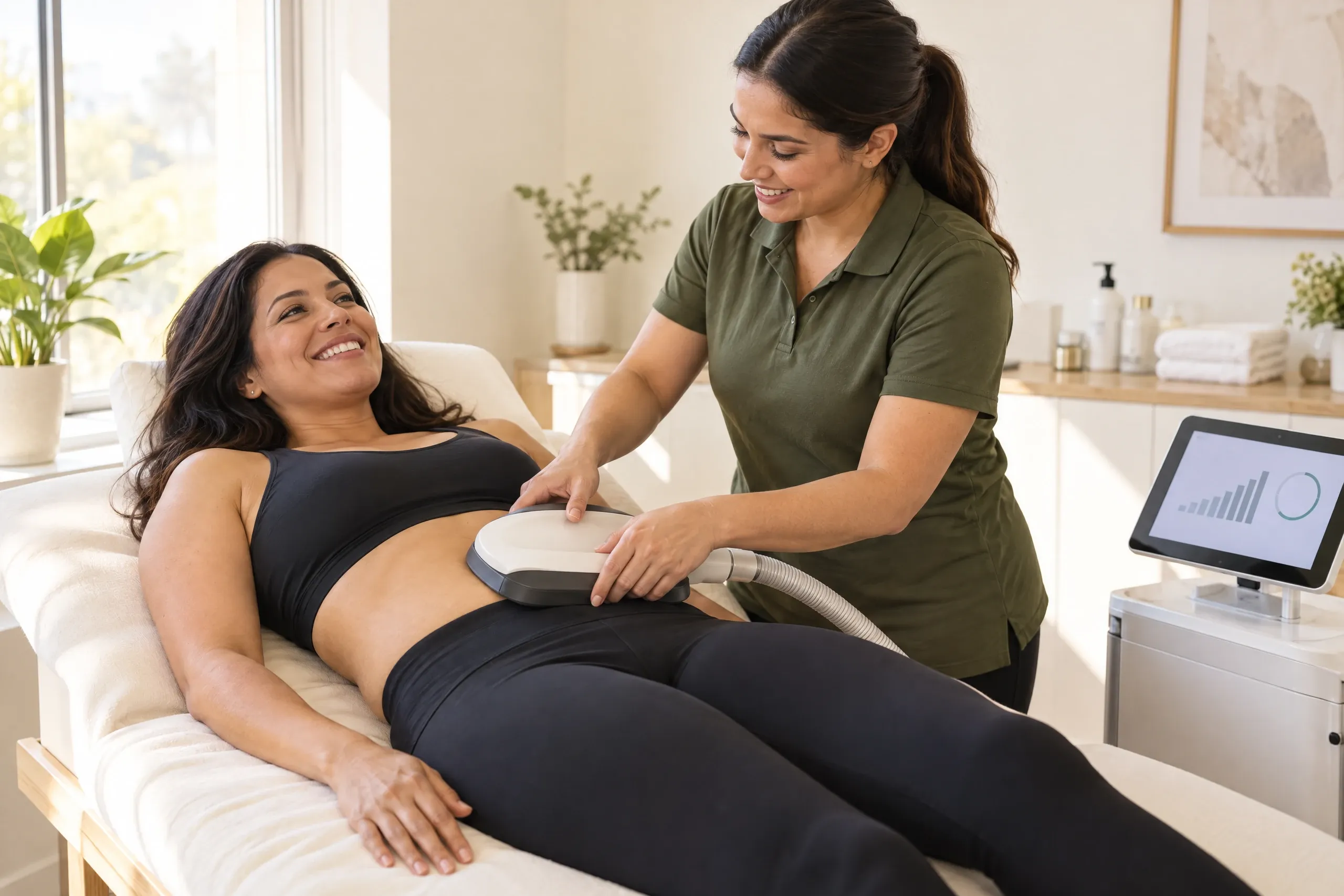
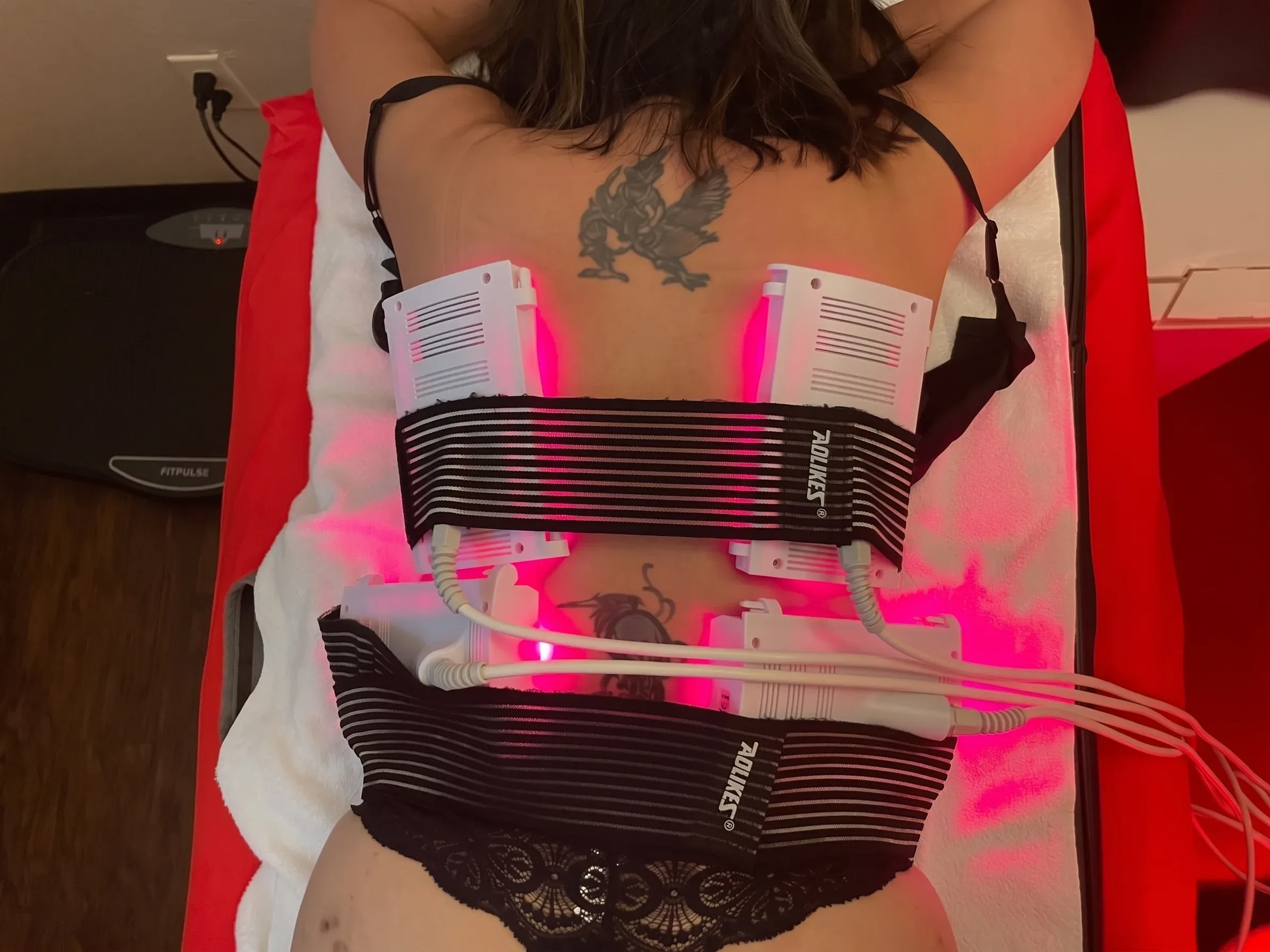
We use the invisa-RED platform, which delivers red light at 680 nanometers and near-infrared at 980 nanometers at the same time, so surface and deeper tissue both receive a dose. A session runs 15 to 20 minutes under the light with the target area exposed and protective eyewear on. It feels pleasantly warm. There is no downtime, and you can train the same day.
Frequency depends on the goal. A common starting cadence is two to three sessions a week for four to six weeks, then a maintenance rhythm your coach sets based on how you respond. It suits active adults managing soreness between workouts, adults over 40 who wake up stiff, and clients on a body program who want skin quality support. Curious what red light can do for your recovery? Book your first session of red light therapy in Charlotte, NC, or read how a first visit works first.
How Coaching Changes the Result
A device-only clinic stops at the session. We do not, because light is a modifier, not a driver. Recovery improves most when sleep is protected, training load is sensible and protein supports repair. Skin responds better with hydration and sun protection. Joint comfort holds when the surrounding muscles get stronger.
So every red light client at Aspire has a coach who tracks how you feel at each session, adjusts frequency, and folds the sessions into the rest of your plan, whether that is sports recovery support, a strength program, or how we coach clients through sleep and stress. To weigh light against other tools, see our recovery and performance programs.
Who Should Check With a Physician First
Red light is low risk for most adults, and a few groups should check with a physician first: anyone taking a medication that increases light sensitivity (some antibiotics, acne medications and certain diuretics among them), anyone with a photosensitivity condition such as lupus, anyone who is pregnant, anyone with active cancer or recent cancer care, and anyone with a seizure disorder triggered by light. Mention any recent steroid injection in the area. Protective eyewear is used in every session.
Your Aspire coach reviews your health history before your first session. Aspire coaches, measures and supports; it does not give medical advice. When a medical question comes up, Impact Health Network licensed physicians answer it through a telehealth visit we arrange.
Frequently Asked Questions About Red Light Therapy Benefits
What are the benefits of red light therapy?
The benefits with the best research support are faster recovery from muscle soreness, improved skin texture and collagen density over repeated sessions, and modest relief of joint stiffness. Clients also commonly report more energy and better sleep, though those effects are less well measured. Red light does not produce fat loss on its own and is not a cure for any condition.
Does red light therapy actually work?
Yes, for specific goals at an adequate dose. Controlled trials and meta-analyses support its use for muscle recovery, skin quality and joint comfort. Results depend on wavelength, power, distance, session length and consistency, which is why a consumer panel used casually often disappoints while a clinical protocol does not. It supports training, nutrition and sleep rather than replacing them.
How often should you do red light therapy?
Most protocols start at two to three sessions a week for four to six weeks, then taper to maintenance. More is not better: the cellular response follows a dose curve, and overexposure blunts the effect. Your Aspire coach sets a cadence based on your goal, whether that is recovery between workouts, skin quality or joint comfort, and adjusts it as you respond.
Does red light therapy help with muscle recovery?
Yes, and this is its best-studied use. Pooled analyses of randomized trials show photobiomodulation reduces markers of muscle damage and soreness and helps strength return faster after hard exercise, performing at least as well as cold therapy. Clients usually notice less day-two heaviness and a quicker return to full training. It does not replace progressive strength work.
Is red light therapy good for skin?
Repeated red and near-infrared sessions have improved skin roughness, fine lines and measured collagen density in controlled trials. The effect is gradual and builds over weeks of consistent sessions. It improves skin quality and firmness rather than removing excess skin, so for significant laxity after major weight loss it is a supporting tool, not the main answer.
Are there side effects?
Side effects are uncommon and usually mild: temporary warmth, slight redness or tightness in the treated area that fades within hours. Eyes are protected during every session. People taking light-sensitizing medications, those with photosensitivity conditions, anyone pregnant, and anyone with active cancer or a light-triggered seizure disorder should check with a physician first. We screen for these before your first session.
How long until you see results?
Recovery effects can show up after the first few sessions, often as less soreness the day after training. Skin changes take longer, typically four to eight weeks of consistent sessions, because new collagen forms slowly. Joint comfort usually improves over several weeks at an adequate dose. Individual results vary, and we track how you feel at each visit.
Book Your First Red Light Session in Charlotte, NC
Curious what red light can do for your recovery? Book your first session at Aspire Trim in Matthews, minutes from Charlotte, NC. Your coach reviews your goals and health history and builds a cadence that fits your week. Call (704) 321-0105 or request your session online, and learn more about red light therapy in Charlotte, NC. We serve Charlotte, Mint Hill, Stallings, Indian Trail, Weddington and Pineville.
Related Articles
- Building Muscle Without Hours in the Gym
- How to Lose Weight After 40: Why It Feels Harder and What Actually Changes
- Loose Skin After Weight Loss: Can You Tighten It Without Surgery?
References
- Glass, J Plast Reconstr Aesthet Surg. (2021). Photobiomodulation: A review of the molecular evidence for low level light therapy. PMID: 33436333.
- Ferlito et al., Lasers Med Sci. (2022). Comparison between cryotherapy and photobiomodulation in muscle recovery: a systematic review and meta-analysis. PMID: 34669081.
- Li et al., Lasers Med Sci. (2024). Can pre-exercise photobiomodulation improve muscle endurance and promote recovery from muscle strength and injuries in people with different activity levels? A meta-analysis of randomized controlled trials. PMID: 38758297.
- Wunsch et al., Photomed Laser Surg. (2014). A controlled trial to determine the efficacy of red and near-infrared light treatment in patient satisfaction, reduction of fine lines, wrinkles, skin roughness, and intradermal collagen density increase. PMID: 24286286.
- Stausholm et al., BMJ Open. (2019). Efficacy of low-level laser therapy on pain and disability in knee osteoarthritis: systematic review and meta-analysis of randomised placebo-controlled trials. PMID: 31662383.
- invisa-RED Technologies. (2026). Device wavelengths (680 nm red, 980 nm infrared) and session specifications.