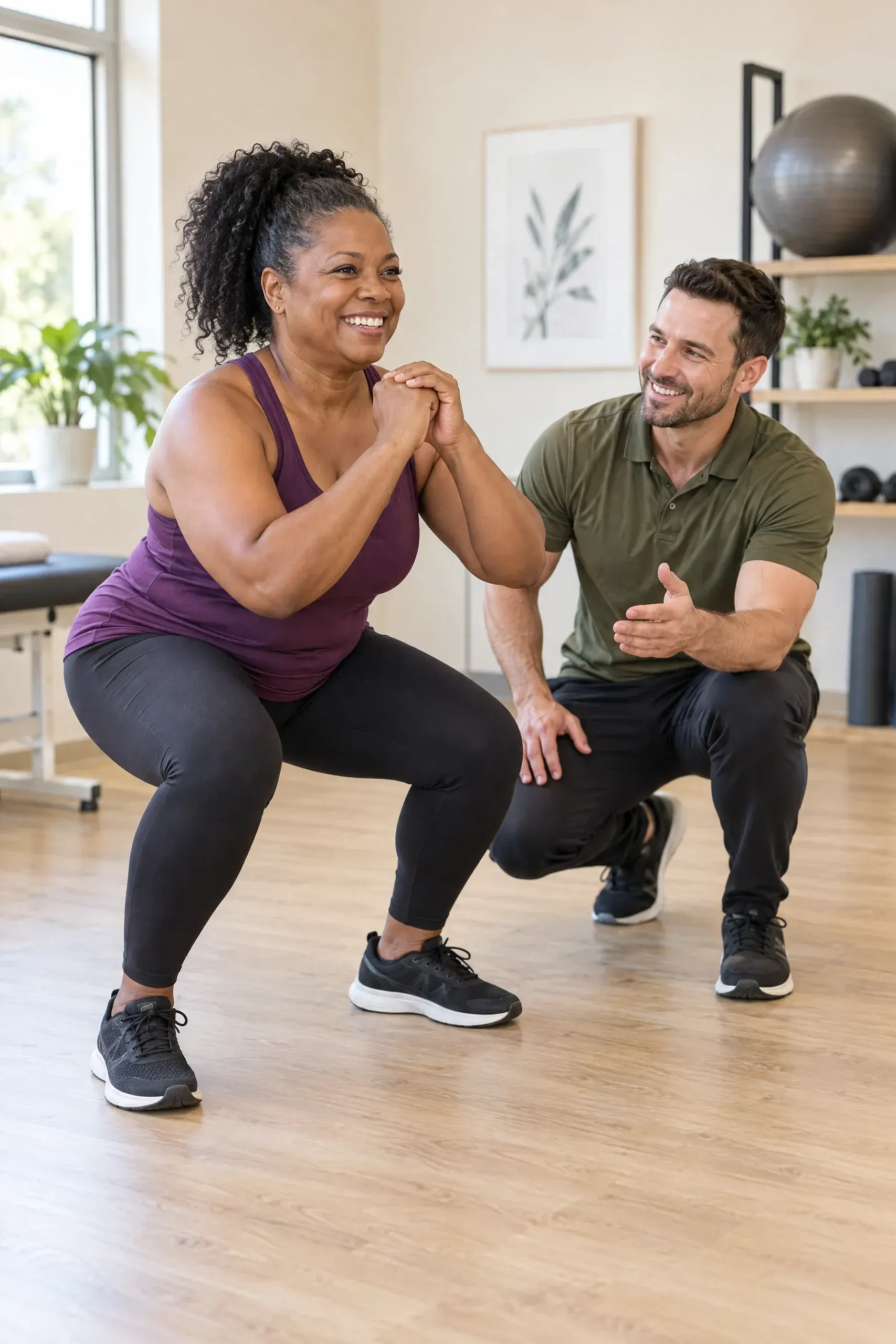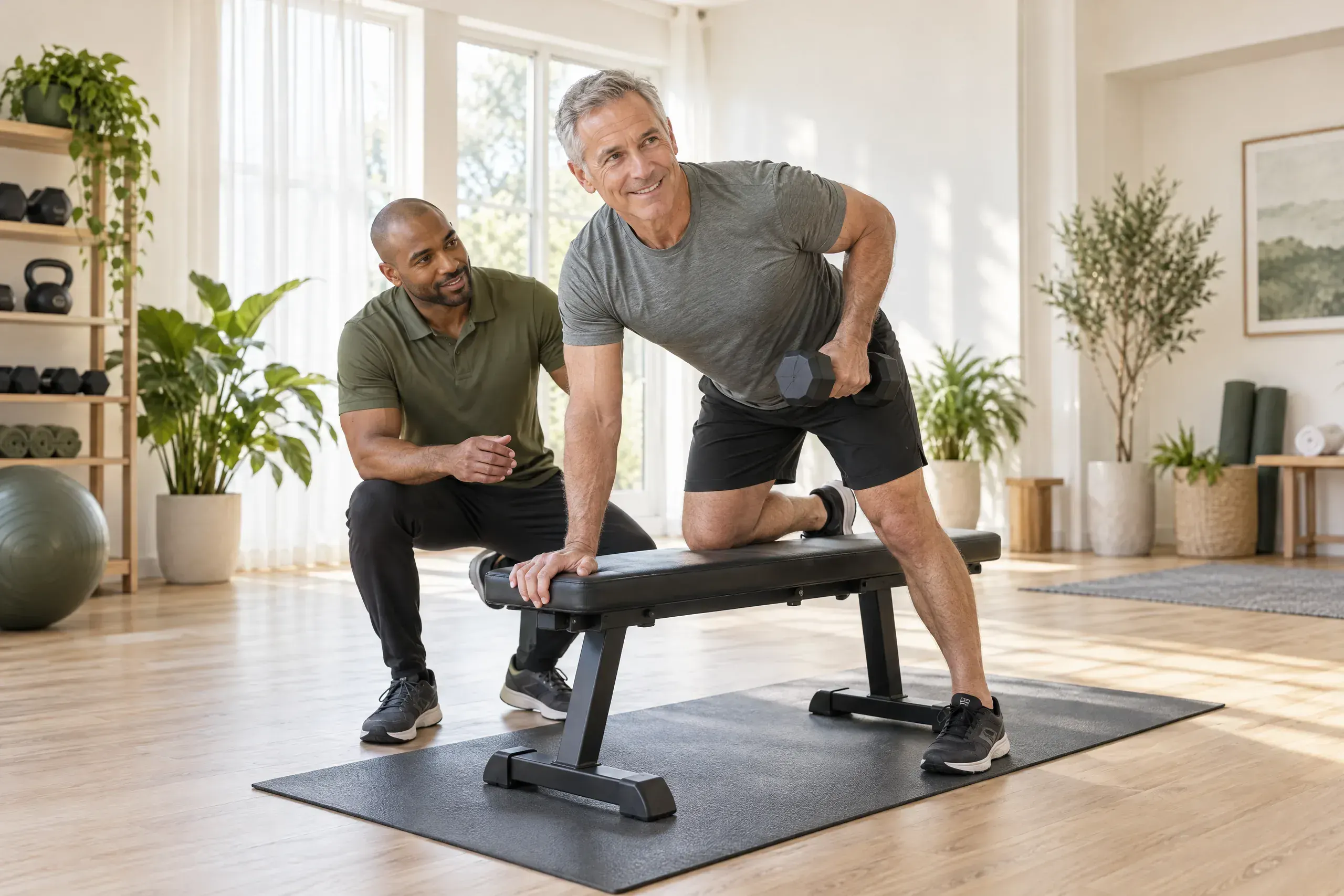

Adult client lifting dumbbells during a coached strength session to build lean muscle near Charlotte, NC
Matthews

Building Lean Muscle in Charlotte, NC: How We Coach You Through It

Common InAdults 35 to 60 who train but no longer see change
Contributing FactorsAge-related muscle loss, low protein, no progressive load, short sleep
Program Length4 Emsculpt Neo sessions or an 8 to 12 week coached program
What ChangesLean mass and body fat tracked by Styku 3D scan, not the scale alone
Client noticing changes in strength and muscle tone during a consultation at Aspire Trim Clinic in Charlotte, NC

Building Lean Muscle: What You May Be Noticing

Common after 35, explainable, and reversible with the right plan

If you have been searching for how to build lean muscle and it feels like the rules changed on you, you are probably noticing several things at once. Workouts that used to leave you firmer now just leave you sore. Your weight has barely moved in years, but your arms, legs and midsection look softer than they did at 30. Carrying groceries, getting up off the floor or hauling a suitcase up the stairs takes more effort than it should. Many clients near Charlotte tell us they feel like they are doing everything right and still losing ground.

This is common and it is explainable. Adults typically begin losing muscle mass and strength in their 30s, a gradual process that speeds up with each decade, and it moves faster in people who sit for work, eat too little protein or stop lifting anything heavier than a laptop bag. The good news is that muscle responds to training at every age. The American College of Sports Medicine recommends resistance training for every major muscle group two to three days a week for adults of all ages, and the research behind that guidance is consistent: give muscle a reason and the raw materials, and it grows.

Reviewed by Brent Mague, MBA, ISSA Weight Management Specialist and Nutritionist. Medical statements describe care provided by Impact Health Network licensed physicians. Last updated: October 2026.

Coach explaining age-related muscle loss and lean mass to a client at Aspire Trim Clinic near Charlotte, NC

Why Building Lean Muscle Gets Harder With Age

Sarcopenia, in plain words

The medical term for age-related muscle loss is sarcopenia. In plain words, it means your body gradually trades muscle for fat unless something actively interrupts the process. Research commonly cites a loss of roughly 3 to 8 percent of muscle mass per decade after 30, with the pace picking up after 60. Older muscle also becomes less responsive to protein and exercise, something researchers call anabolic resistance, so the same meal and the same workout send a smaller building signal than they did in your 20s. That is why the routine that worked at 28 stalls at 45.

Lean mass matters for far more than how you look. Muscle is metabolically active tissue, so carrying more of it modestly raises what you burn at rest and makes a weight loss plan easier to hold. Skeletal muscle is also the body's largest site for clearing glucose from the bloodstream after a meal, which is one reason lean mass and blood sugar handling tend to move together. And from your 60s onward, strength is one of the best predictors of staying independent: getting out of a chair, catching yourself on a stair, carrying what you need to carry. This is why Emsculpt Neo body contouring in Charlotte, NC at Aspire always comes with protein and strength targets, never sessions alone.

The other reason it gets harder is that the four things muscle needs tend to slip at the same time. Protein intake drifts down. Training stops getting progressively harder, so the muscle has no reason to adapt. Sleep gets shorter, and most muscle repair happens while you sleep. Recovery takes longer, so sore joints and a tired back quietly cut your training volume. Each of these is fixable, and our functional wellness program in Charlotte, NC was built for clients whose core and lower back are the thing holding everything else back.
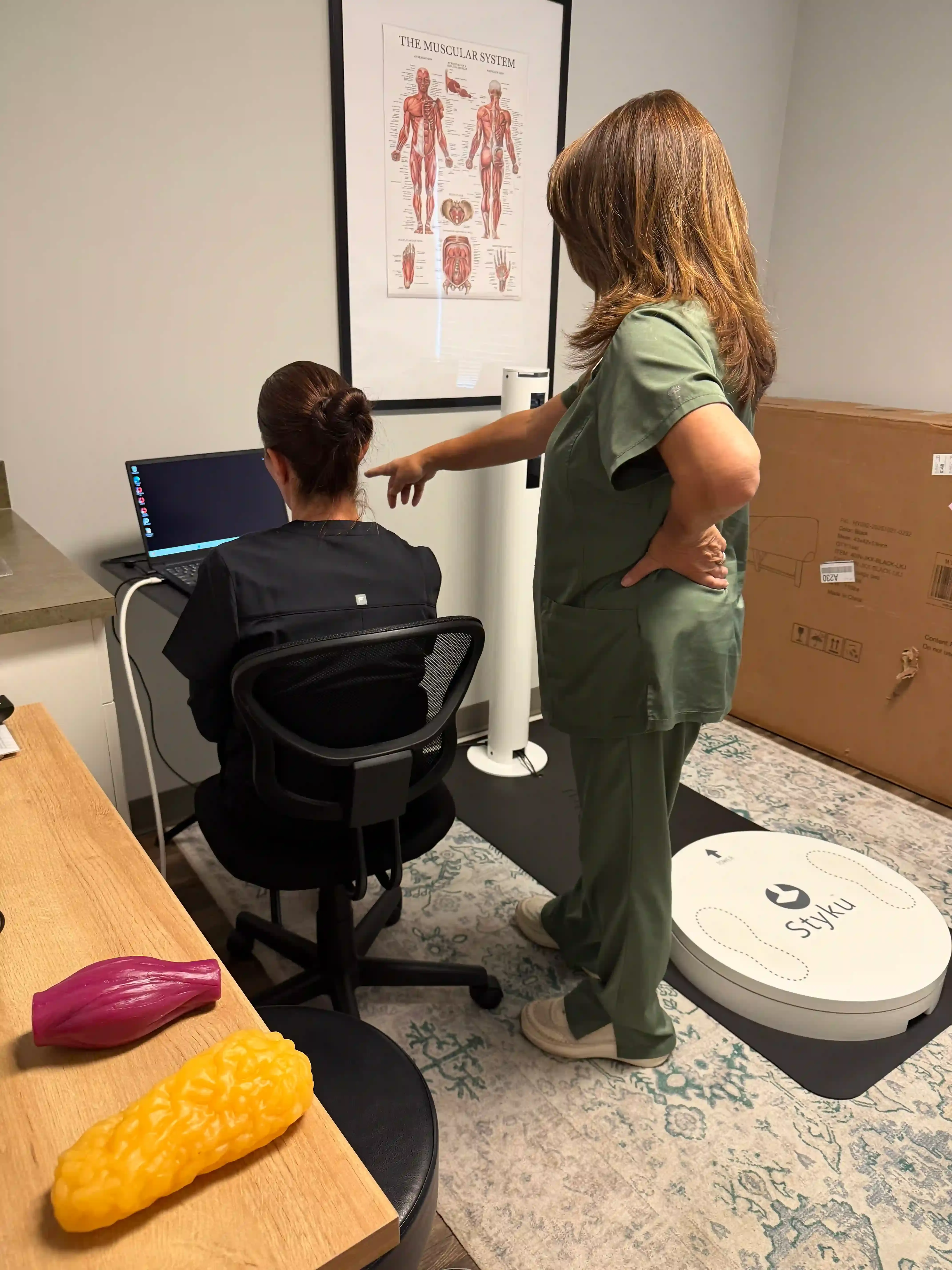

Styku 3D body composition scan tracking lean mass for a building lean muscle plan at Aspire Trim Clinic, Matthews, NC

How We Coach You Through It

Scan, goal-setting, protein, progressive load, recovery, rescan

Every client starts with a free consultation and a Styku 3D body composition scan. The scan takes about 35 seconds, returns 33 measurements in under two minutes and, most importantly for this goal, separates lean mass from body fat so we are not guessing from a bathroom scale. Research shows high concordance between this type of 3D optical scan and DXA for fat mass and fat-free mass. Then you sit down with Brent Mague, MBA, ISSA Weight Management Specialist and Nutritionist, for a goal-setting session where you say out loud what stronger means to you. You can read the full path on our how it works at Aspire Trim page.

From there the plan has four parts, each owned by someone on the team. Olivia Mague, BS, our Exercise Science and Fitness Specialist with a degree in Kinesiology and Exercise Science from UNC Charlotte, builds your resistance training programming: which lifts, how many days, and how the load climbs week over week so your muscle keeps getting a reason to grow. Jillian Harrell, MS, RD, LDN, our Registered Dietitian and ACSM Certified Exercise Physiologist, sets your protein target and shows you how to spread it across the day instead of loading it all at dinner. Brent coaches sleep and recovery habits, because muscle is built between sessions, not during them. And where it fits, Jayde da Costa, our Certified Body Contouring Specialist, adds Emsculpt Neo sessions to the areas that need a head start.

Accountability is the part most people have never had. Check-ins are scheduled, in person at the Matthews clinic or by video, and every few weeks you rescan on the Styku so changes in lean mass are measured, not described. If progress stalls, we change the plan rather than blaming you. If soreness or an old injury keeps cutting your training short, the muscle and joint recovery support program addresses the recovery side first. Compare the Essential, Trim & Tone and Elite options on our weight loss coaching packages page, and for the short version of this whole approach, read building muscle without hours in the gym.

What Contributes to Difficulty Building Lean Muscle

These are the contributors that show up most often in our goal-setting sessions, and every one of them responds to the right structure.

Age-Related Muscle Loss

Adults commonly lose muscle mass and strength each decade after 30, and the pace quickens after 60 unless resistance training interrupts it.

Anabolic Resistance

Older muscle responds less to the same protein and the same workout, so the dose that built muscle at 25 only maintains it, at best, at 50.

Too Little Protein

Many adults eat well under what the research on preserving lean mass supports, and most of what they do eat lands at dinner, too late to help.

No Progressive Load

The same workout at the same weight for years gives muscle no reason to adapt. Growth needs the load to climb, gradually and on purpose.

Short Or Broken Sleep

Most muscle repair happens during sleep. Nights under seven hours blunt the building signal and make the next session feel harder than it is.

Hormonal Shifts

Declining testosterone in men and estrogen through perimenopause change how readily muscle builds, a question for Impact Health Network physicians.

Aspire Trim Clinic coaching team in Matthews, NC, who guide clients building lean muscle near Charlotte

Why Choose Aspire Trim Clinic for Building Lean Muscle Support in Charlotte, NC

Coaching from Aspire, medical care from Impact Health Network

  • Scan First
  • Coach-Led Programming
  • Registered Dietitian On The Team
  • Medical Partner When Needed

Programs That Support This Goal

Where to start

Program How It Helps Best For Time Commitment What to Expect
Emsculpt Neo HIFEM contractions build muscle and reduce fat, per BTL's clinical data Visible change in the core, glutes, arms or legs Four 30-minute sessions, 5 to 10 days apart Measured by rescan, individual results vary
Functional Wellness with Emsculpt Neo Deep core, lower back and glute strength plus movement work A back and core that hold up to training Four sessions plus a home program Judged by how you move, results vary
Muscle & Joint Recovery Support Training load review, protein target, sleep plan, red light sessions Soreness or old injuries cutting training short 8 to 12 weeks, check-ins every 2 weeks Easier recovery, then steadier training
3D Body Composition Scan Measures lean mass and body fat in about 35 seconds Everyone, as step one Single visit, rescans every few weeks A clear baseline and honest progress numbers
Adult in their 40s considering a coached plan for building lean muscle, Aspire Trim Clinic near Charlotte, NC

Signs This Page Is for You

What clients tell us at the first visit

  • Softer At The Same Weight
  • Everyday Things Feel Heavier
  • Your Workouts Stopped Working
  • Sore For Days
  • You Lost Weight And Strength Together
  • You Want To Stay Independent

Building Lean Muscle: Your Questions, Answered

Before you book

What does building lean muscle actually mean?

It means increasing the amount of muscle tissue you carry while keeping body fat steady or bringing it down, so the change shows up in strength and shape rather than on the scale. The scale cannot tell the two apart, which is why we track lean mass and body fat separately with a Styku 3D body composition scan at the start and at every rescan. Individual results vary.

Why is it harder to build muscle after 40?

Because muscle loss starts quietly in your 30s and older muscle responds less to the same protein and training, a shift researchers call anabolic resistance. Add shorter sleep, slower recovery, lower protein intake and hormonal changes, and the routine that built muscle at 28 only maintains it at 45. None of that makes it impossible. It means the plan has to be more deliberate, and that is what coaching provides.

How much protein do I need to build lean muscle?

More than most adults eat, and spread more evenly across the day. Jillian Harrell, MS, RD, LDN, our Registered Dietitian, sets a personal target based on your body weight, your scan and your training plan, then shows you how to hit it with real food across three or four meals instead of one large dinner. Research consistently links higher protein intake during training to better lean mass outcomes.

Do I have to spend hours in the gym?

No. Two to three well-planned resistance sessions a week, each covering the major muscle groups, is the guidance from the American College of Sports Medicine and is enough for most adults to build muscle when protein and sleep are handled. Olivia Mague, BS, programs what to lift and how the load climbs so every session counts. Our article on building muscle without hours in the gym walks through a sample week.

Can Emsculpt Neo replace strength training?

It is a strong head start, not a replacement. Emsculpt Neo pairs HIFEM muscle contractions with synchronized radiofrequency in 30-minute sessions, and BTL's clinical data reports an average of 25 percent muscle growth and 30 percent fat reduction in the area, with individual results varying. At Aspire it always comes with protein and strength targets, because the muscle you build is only worth keeping if your training and nutrition support it afterward.

When does medical care come in, and who provides it?

Whenever a medical question sits underneath the goal: low testosterone, perimenopause, thyroid function, a medication that affects muscle, or labs you want checked before you start. Aspire is not a medical practice. Those pieces are handled by Impact Health Network licensed physicians through a telehealth visit we arrange for you, often from the clinic. Your coach prepares you for the visit and follows up on what the physician recommends.

How long before I see results, and how do you measure them?

Most clients feel stronger within three to four weeks, and the rescan at about week six usually shows measurable change in lean mass, body fat or circumference. Visible change in muscle shape typically takes eight to twelve weeks of consistent training and protein, longer if you are also losing weight. We measure with the Styku scan and your training log, not the mirror alone. Individual results vary.

How do I get started, and what does it cost?

Call (704) 321-0105 or book a free consultation online, and the first step is the scan and a goal-setting session with Brent Mague. Exact investment depends on the coaching package, any Emsculpt Neo or recovery program you add, and any telehealth care, and it is discussed at your consultation once we know your starting point. Cherry payment plans are our primary financing option, with PatientFi and Klarna also available.

Schedule Your Complimentary Consultation Today

Scientific References

Within arm's reach (704) 321-0105
Book a Free Consultation
Cherry Monthly Payments